
Share Charlotte Porter-Leal's obituary with others.
Invite friends and family to read the obituary and add memories.
Stay updated
We'll notify you when service details or new memories are added.
You're now following this obituary
We'll email you when there are updates.
Select your format and elements to print


IN LOVING MEMORY OF Charlotte Porter-Leal
Charlotte
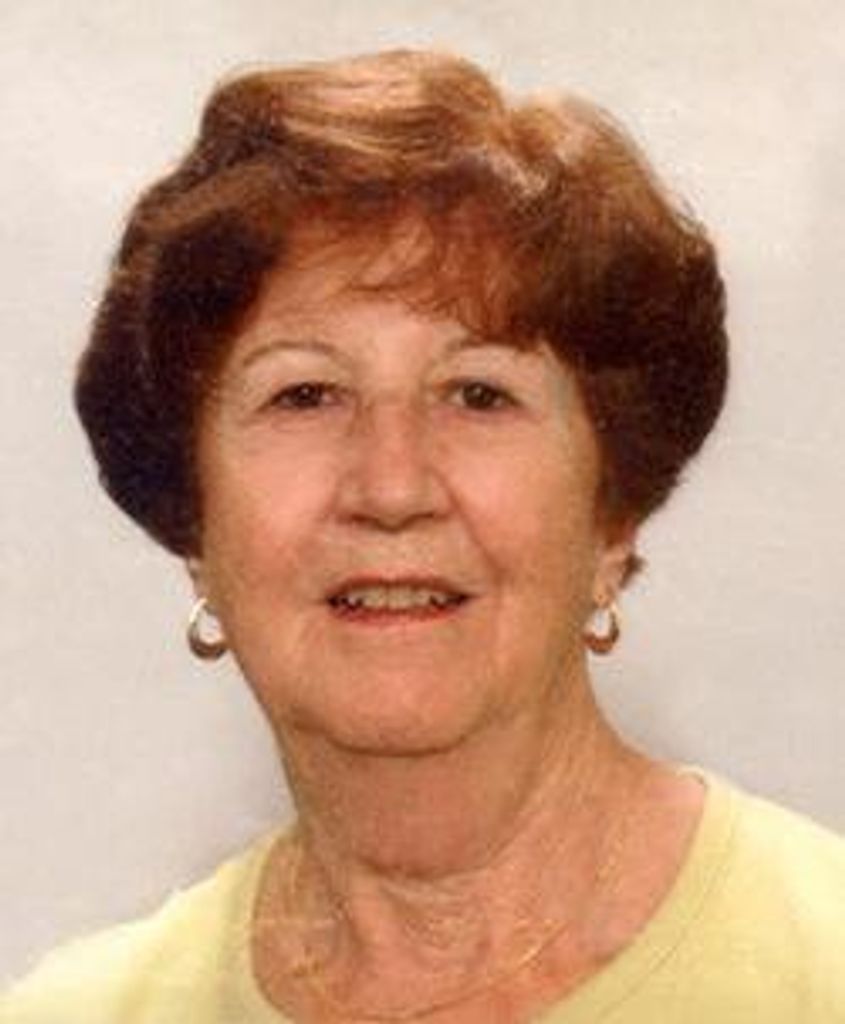
Porter-Leal
Mar 10, 1926 — Jul 16, 2011
Charlotte Porter-Leal's Obituary
Funeral service for Charlotte Porter-Leal, 85, Lawton, will be 10:00 a.m. Tuesday in the Becker Funeral Home Memorial Chapel. Mrs. Leal died Saturday in a Lawton hospital. Burial will be in the Post Cemetery, Fort Sill, under the direction of the Becker Funeral Home & Cremation Service. She was born March 10, 1926 in Munich, Germany to Michael and Amalie Schletzbaum. She married CWO4 John R. Porter on January 13, 1949 in Augsburg, Germany. They were stationed in various locations, starting with Fort Hood, Texas, Fort Lewis, Washington, Baumholder, Germany, and Fort Sill, Oklahoma. They came to Lawton in 1958 where Mr. Porter retired. He preceded her in death on December 16, 1976. She was a longtime member of the German-American Club of Lawton. She married Vidal Leal on April 12, 1988 in Wichita Falls, Texas. She is survived by her husband, of the home; two daughters and sons in law, Barbara and Joe Keen, New Braunfels, Texas, and Elizabeth and Wilson McDonald, Coppell, Texas; a son, J. Michael Porter, Simpsonville, South Carolina; two grandchildren, Leah Dollahon and Cameron McDonald; a great grandson, Trevor Dollahon; two step daughters, Gloria Leal, Lawton, and Katheryn Cheney, Santa Rosa, California; a stepson, Michael Leal, Erie, Pennsylvania; numerous step grandchildren. Her brother, Anton Schletzbaum, her parents, and her mother in law, Natividad Flores, preceded her in death. Letter from Charlotte Sophie (Schletzbaum/ Porter) Leal, mother of Barbara Keen To All my children: For some time I've been thinking of writing down the story of my early years. Time seems to be just flying by and we're all scattered far and wide. I was born in Muenchen, Deutschland, (Munich, Germany) and had a very normal childhood considering we didn't own a car, telephone TV or refrigerator. My father, Michael Josef Schletzbaum was born 1893 in Kirchdorf a.Inn, in the foothills of the Alps just a few train stations before Kufstein,Tirol. His parents, Michael Konrad and Marie Schletzbaum were already deceased before I was born. My Grandfather was the teacher in the village, he also played the Organ in church. My Grandmother taught knitting, embroidery etc., she played The Zither, which then was a popular instrument. My Dad was a Veteran of WWI and worked for the City (Hoch & Tiefbauamt) My mother, Amalie (geb.Zollitsch) born in 1879 was Muenchnerin and her parents were Josef and Marie Zollitsch. They lived in the centrum of Munich around the corner from Hotel Vier Jahreszeiten. My Oma and Opa played a big part in my early years along with Tante (aunt) Marie and Tante Milly. Toni, my half brother was nine years older than I and lived with us only intermittently. He was drafted into the Wehrthacht (Gebirbsjaeger) and was killed in 1941 in Kiev, Russia, now Ukraine. We lived in an apartment complex in Untergiesing in the south of Munich Close by the Tierpark (Zoo). It was a 4 story building and we lived on the 2nd Floor, Jakob Gelbplatz 3. Streetcar #5. I went to school, Kindergarten through 8th at the Agilolflngerschule. My school Hours were from 8-12 and 2-4. So I walked about 2 miles 4 x a day since We went home for lunch. Girls and boys were taught separately and we stayed with the same teacher in one room all year. The exception was the parish priest who came twice a week to teach one hour of religion. We learned to swim at the Volksbad and had a separate teacher for homemaking. There were no extra-curricular activities. Bavaria is predominantly Roman Catholic. Our lives and culture were very much involved in the church. You might say our second language was Latin. Friday mornings before school I went to mass, on Saturdays once a month to confession. Of course Sunday mass. The month of May was dedicated to Holy Mary, so evenings we went to Maiandacht (Rosary). A big event was first Communion and Firmung(confirmation). I got my first watch then and Tante Marie took me to the Botanical Garden. After the Weimar Republic collapsed we ended up with 3 political factions The Communists (red), the National Socialists (brown) now commonly called Nazis, and the Conservative Religious (black). My family belonged to the latter. I recall going with my parents to vote at our school, must have been in 1936, they voted for Hindenburg. My mother was a Hausfrau(housewife) and frugal wasn't the word. We shined our shoes and mended socks and stockings. I always had to wear an apron at home, I learned to knit early on, so we knitted our own socks, mittens and sweaters. In the evening we sat around the kitchen table and everyone read a book. I wore pigtails till I was a teenager, and then it was a fight with my Dad to get my hair cut. Then came Sept 1, 1939. and it changed our lives forever. Hitler had been reversing the results of the Treaty of Versailles for several years. He wanted all the German territories that had been given to neighbors to come back to the Reich. England, having dominated the globe for centuries, did not look kindly on up-and-coming Germany. It all started over the German port city of Danzig (now Gdansk, Poland), when negotiations with Poland broke down. In the meantime when I was barely 14, I started my 3 year apprenticeship with Bankhaus Seller & Co. (formerly Aufhaeuserjewish). I went every day on the streetcar downtown. It was right by the Dom. I moved from department to department and I loved it. In my third year I only made 80 Marks, from that I paid my monthly streetcar pass and my lunches. The other half went to my Mom. At the same time I attended Bankkaufmann school twice a week where I took math, steno, Economics, and English. The war was going from bad to worse and banking was not considered important for the war. Not Kriegswichlig! So one of my bosses arranged for me to transfer to Wacker Chemie in bookkeeping (Connections, ha) I had that job only a little while when I was drafted to the RAD (Reichsarbeitsdienst). It was for 1 year, 1/2 In Pleystein on the Czechoslovakian border on the farm and the other half with the streetcar in Munich. In Pleystein we lived in a barrack, in bunk beds (I had an upper) 10 to a room. My mother sent me flea powder because we slept on straw sacks that I had to rearrange in the morning or I would've had to sleep on boards. One night we had an incident where the young guys from the village, home on leave, came to visit. Since I was not involved, but a witness, I bad to testify. After the investigation I was transferred to beautiful Oberammergau for the rest of my time. At that time the air raids became so constant we had to go to the cellar almost every night along with one suitcase and my Federbett(down featherbed). Sleep deprived wasn't the word, especially when I hail the first streetcar of the day and had to walk to the car barn at 4 in the morning. We dreaded a moonlit night and the sound of the sirens. Our newspaper had obituaries pages full, single spaced, from the night before. We tried to survive from one day to the next. Then in November 1941 the bombs hit our house and we lost everything except the clothes on our backs. My mother was in the cellar and just barely escaped. I was in a stranger's cellar somewhere in town since it was a daytime attack. What I will never forget is the smell of broken cement, of smoke in the hair and in our clothes, plus the sound of the bombs. Germany has cold winters, but the one of 1944/45 was the coldest I've ever lived through. My parents found refuge in Freising in the house my Grandfather was born in. It must've been over 300 years old by then and belonged to my Grosstante(Great Aunt) Anna. She rented them the attic. The story was told, that during Napoleon's drive through the area in the early 1800's trying to recruit new soldiers, one of my ancestors (he was Schaefflermeister and made wooden barrels) hid his son in a wooden doghouse that had an enormous spider-web in the front He removed the back and nailed it shut again. I went back to my job at Wacker Chemie(chemical). I was assigned a room with a family close by where Tante Marie lived in Haidhausen. By then the air raids were so disruptive it was impossible to conduct business and my company moved the whole bookkeeping Department to Burghausen a.Salzach (on the border with Austria) where the factory was located. There I shared a room with a colleague. Our firm had a contract with the nuns of the local convent to serve us one meal a day. Which was unbelievable considering how little we had to eat. By then we all were on ration coupons, I believe it was 400 gr. of meat per person per month. The nuns worked a big garden and we had vegetables, a lot. We were pretty much isolated down there, so my boss asked me daily to go to his room where he had a radio to take down the Wehrmachtsbericht(war news) in steno which I then posted on the bulletin board. It made me acutely aware that the Russians were coming up the Danube preceeded by awful rumors, which turned out to be so true. So I quit my job and took the last train out of Burghausen. We made it only halfway before a single aircraft attacked us. Everyone was running into the woods looking for the biggest tree to hug. After the ack ack of the machine gun subsided we saw our locomotive up in smoke and we all were on foot. My suitcase held everything I owned, so I walked and hitchhiked all the way to Freising. I arrived there in the middle of the night. My Mom was there alone since my Dad had been drafted in the last weeks of the war to the Volkssturm. It was a unit comprised of all the old men and young boys to make a last stand to defend the Vaterland. It was the end of April 1945 but we had no idea it was the end of the war. We didn't know what had happened to my father. He was taken POW and spent 6 months in the Rhineland sleeping on the ground. He came walking home the end of August looking like a skeleton. The sound of artillery fire told us the Americans were closing in. For about 2 weeks everything closed down. There were no open stores, no bread, no milk, no nothing. We heard a rumor that a freight train was abandoned at the train station, so my cousin and I pulled a little wagon out there and filled a whole sack with sugar. We walked by patrolling Amis (that's what they were called), both of us shaking like a leaf. Then we went up to the German barracks scrounging for anything we could find. A unit had confiscated the hotel in front of our house. We went there every morning to beg for the coffee grounds before they threw them out. By then a military government took over and we were on ration coupons again. I found a job with Steinecker & Sohn, a construction company with Ziegelei (brick factory), he also was an architect. I worked for him almost three years. That made up my seven (work) years for which I'm still receiving a small pension from Germany.
Charlotte Porter-Leal's Guestbook
Visits: 0
This site is protected by reCAPTCHA and the
Google Privacy Policy and Terms of Service apply.
Service map data © OpenStreetMap contributors